Follow Us

Tag: Newsletter 5th Article

  • Brakes, tires, lights lead violations during 3-day inspection blitz

    Brakes, tires, lights lead violations during 3-day inspection blitz

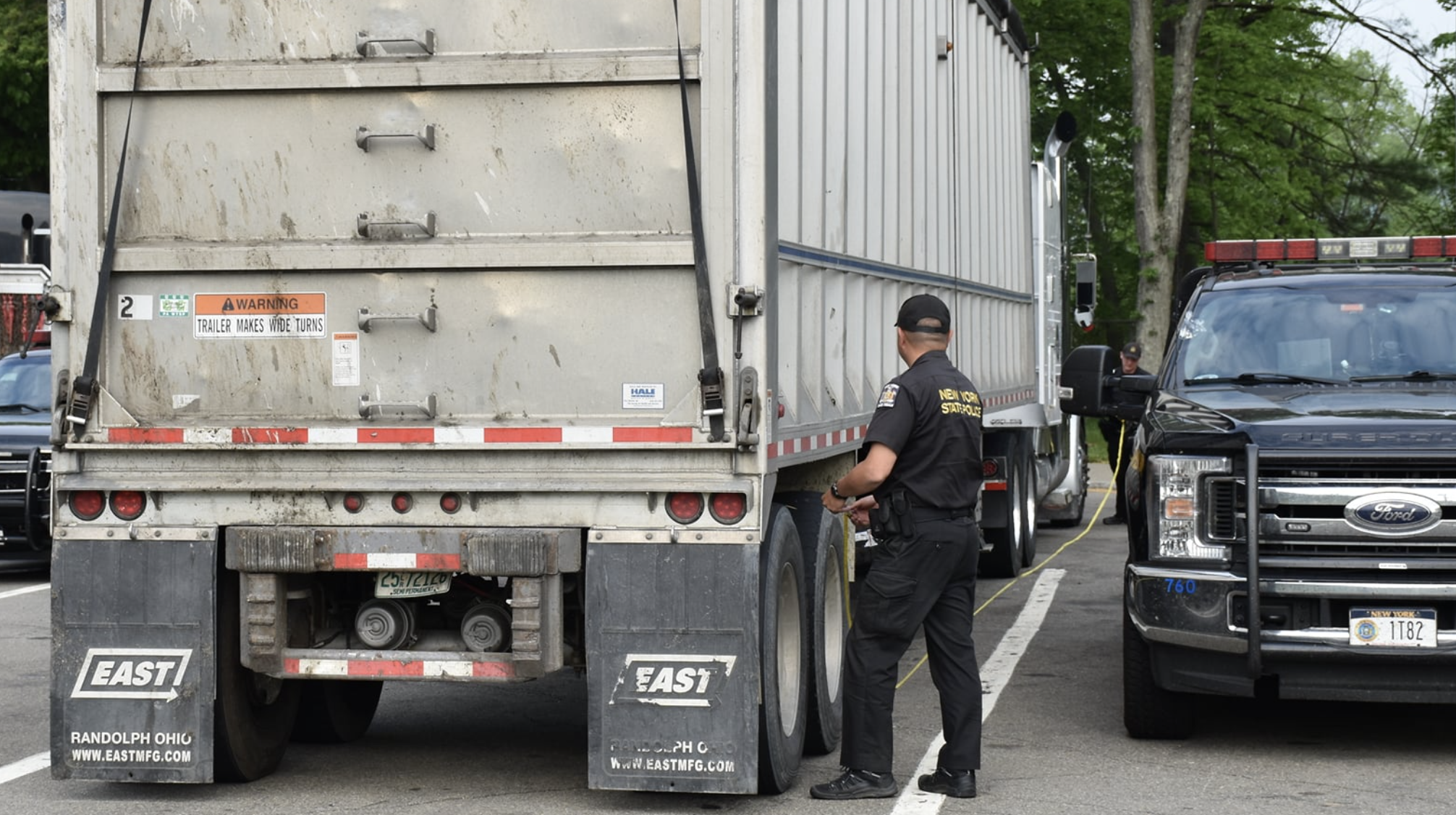
    Equipment problems topped the list of violations that led to 10,148 commercial vehicles being place placed out of service during a recent three-day inspection blitz in the U.S., Canada and Mexico.

    International Roadcheck, which is conducted by the Commercial Vehicle Safety Administration, was held May 13-15.

    Last year, inspectors placed 9,345 commercial motor vehicle combinations out of service.

    Of the vehicle violations that led to out of service declarations in the U.S., Canada and Mexico :

    • 3,304 were for brake problems
    • 2,899 were for tires
    • 2,257 were for 20% defective brakes
    • 1,737 for lights
    • 1,549 for cargo securement

    Combined, there were 5,561 brake-related out-of-service violations, accounting for 41.1% of out-of-service vehicle violations.

    Inspectors conducted 56,178 Level I, II, III and V Inspections during the three days of International Roadcheck.

    Since its inception in 1988, more than 1.8 million roadside inspections have been conducted during International Roadcheck. For this year’s initiative, approximately 13 vehicles per minute were inspected throughout North America.

  • John Deere TECH program helps meet dealerships’ needs for qualified technicians

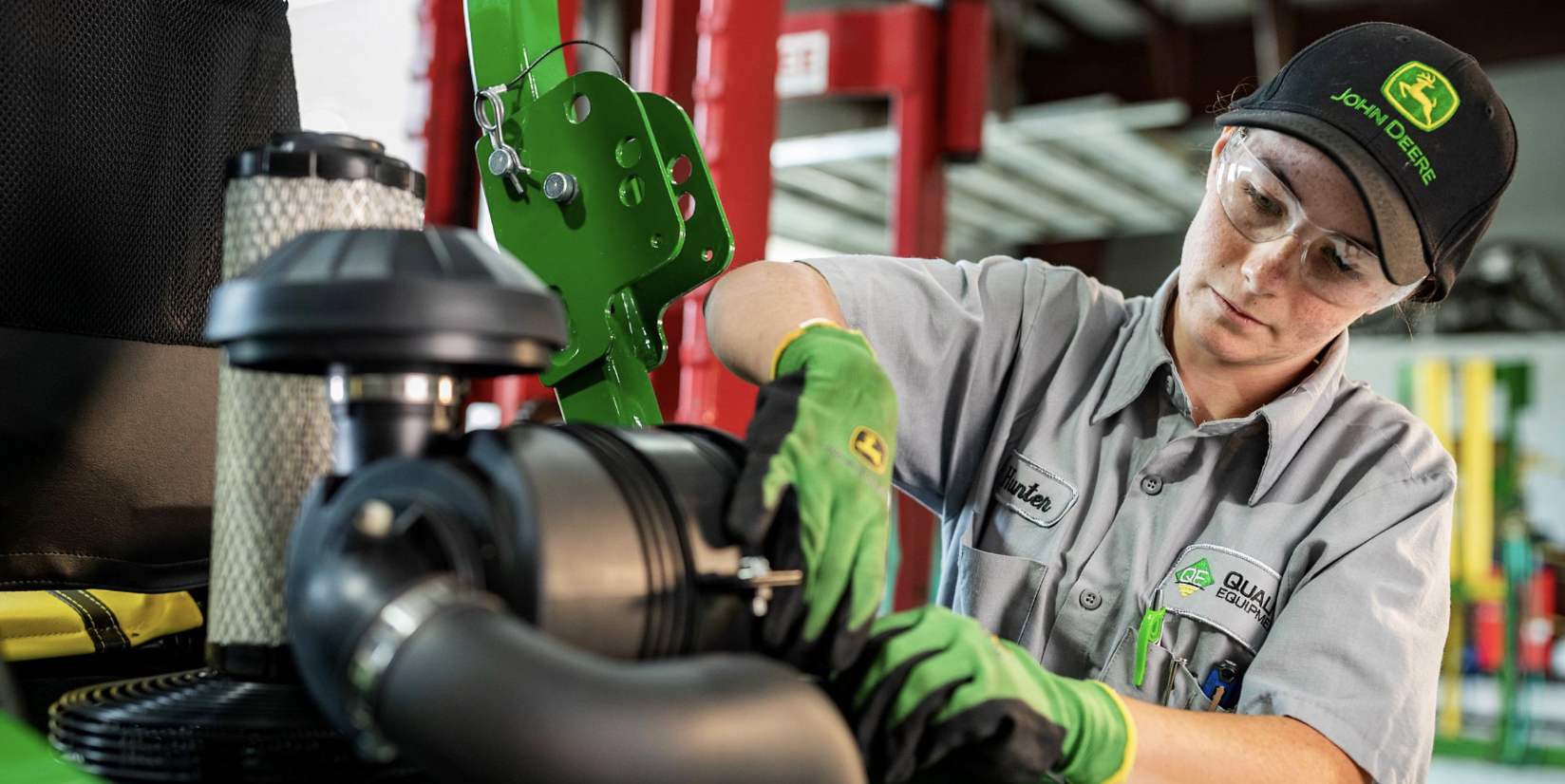
    John Deere TECH program helps meet dealerships’ needs for qualified technicians

    Developing new technicians needed by one of this country’s oldest and largest manufacturers of agricultural and heavy equipment is comparable to building a three-legged stool. 

    The first leg is a group of 23 colleges across the U.S. and Canada.

    The second is made up of the more than 2,000 dealership locations providing sales and service.

    The third is the company itself, which supports the colleges and the dealership sponsored students.

    Combined, they make up the John Deere TECH Program, which ensures a stream of new well-trained technicians are in the dealership’s talent pipeline to meet the growing demand for skilled technicians to work on John Deere products.

    Jason Kinzey is one of John Deere’s Service Development Managers. He and two colleagues coordinate the program, which began in 1989.

    Kinzey explains the basics of the John Deere TECH program:

    “The way our program works is a split between John Deere, the company, our dealers, who are independently owned businesses, and our partner colleges. Without all three partners working together, we’re not successful because we require a dealer sponsor for on the job training during the program.”

    Kinzey said students become involved with the John Deere TECH program generally in one of several ways. He said some will learn of it after having visited a local dealership. Many find the website online, while others, according to Kinzey may have found out about it through a school visit or career event.

    No matter how they find out, Kinzey said the potential technicians wind up in a college program focused on John Deere products..   

    “So we have a mix of classroom theory learning, and then we have hands-on shop learning to reinforce the theory, and then we send you to your dealership to actually get real world experience on live equipment.”

    And, of course, like so many learning options today, John Deere TECH also has a new virtual program. It allows students to work full-time at dealerships while taking online classes. This helps address the geographical challenges some students may face.

    Kinzey adds that students can choose to transfer high school dual credit classes to the college they are attending and then earn their associate’s degree.

    Regardless of the college they enroll in, Kinzey says students in the company’s TECH program will go through training specific to John Deere equipment and systems.

    What students learn is, in part, driven by the needs of the dealerships. Kinzey says every institution has an advisory board that helps ensure students are learning skills to be successful and also meet the needs of the supporting dealerships.

    “Dealers are advising our schools on their specific needs and curriculum updates and revisions based on industry changes.”

    Kinzey says that when students are doing their internship while not on campus, the dealership can reinforce what they learn in their classes with work assignments.

    “The expectation is then when you’re back at the dealership, the service manager knows, ‘a student just completed basic electrical and basic hydraulics, so they assign that student jobs with a senior technician, that are electrical and hydraulic issues and reinforce what they learned at school on  live work.

    Most dealers have a tuition reimbursement program for the students they hire following graduation, according to Kinzey. 

    The John Deere TECH Program also ensures that college instructors are well versed in the company’s systems and equipment.

    “We provide training, and training aids to those instructors,” says Kinzey. He and his two counterparts bring them together for an annual training event for continuing education. They also provide new equipment that rolls in and out of the school each year for instructors to use.

    And, is the John Deere TECH program being successful? Kinzey says the program has a fill rate of about 90%.

    But there are also other ways to measure the program’s success.

    Kinzey explains:

    “I see several students that as a junior in high school or a sophomore they decided, ‘Hey, I want to be a technician and I want to work on John Deere tractors,’ and they get a part-time job at the dealership. 

    “They’ve worked there for a couple years before we ever get them in the classroom, and they’re excited and they complete the program and hit the ground running.”
  • Online air brake training available

    Online air brake training available

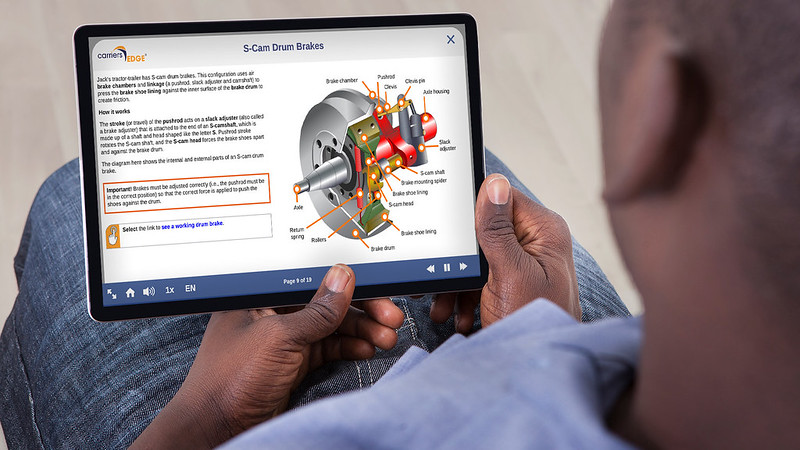
     CarriersEdge, a provider of online training for the trucking industry, has released a new series of courses on air brakes. The program is based on Techni-Com’s Practical Air Brakes, with content provided by the Commercial Vehicle Safety Alliance (CVSA).

    The course provides a clear overview of how air brake systems work, from producing braking force at the wheel to performing safe and effective inspections.

    “Techni-Com’s content is second-to-none, and well established as the industry standard,” said Jane Jazrawy, CEO of CarriersEdge. “With the addition of the material from CVSA, there’s no other online course on the market with this depth of content. We’ve even created an interactive, virtual brake board that allows participants to see all the working parts of an air brake system and how they interact.”

    Participants will learn the function of each subsystem and its components, and what to watch for during a visual inspection. The training also covers operational tests and brake adjustment best practices so participants can determine if their air brake system is safe to operate.

    “Air brake defects continue to plague the trucking industry,” said Rolf VanderZwaag, President, Techni-Com Inc. “It is a complicated subject that can challenge even experienced drivers. Driver education is the key to a clean safety record, and an approachable, engaging, learning experience ensures drivers learn effectively. CarriersEdge has created an exceptional series of courses that are detailed, thorough, clear, and easy for drivers to digest.”

    The program includes eight interactive modules that can be taken individually or as a compilation course totaling 156 minutes of training:

    • Practical Air Brakes: Air Brake Fundamentals
    • Practical Air Brakes: The Supply Subsystem
    • Practical Air Brakes: The Service Brake Subsystem
    • Practical Air Brakes: The Spring Brake Subsystem
    • Practical Air Brakes: The Trailer Brake Subsystem
    • Practical Air Brakes: Visual Brake Inspections
    • Practical Air Brakes: Conducting Functional Tests
    • Practical Air Brakes: S-Cam Brake Adjustment

    In addition to the core training, the course also includes a baseline test for each module, so drivers can check their knowledge without reviewing the entire course, which is helpful for assessing a driver’s understanding and need for training. It also includes Put it into Practice (PiiP) exercises to supplement the online training with in-person activities. PiiPs include driver recognition, social media, surveys, and hands-on practice, all designed to reinforce learning, make the jobs of those administering training easier, and deliver better results.

    The new program is available in English to all CarriersEdge subscription customers, with French and Spanish versions coming soon. For a free trial of CarriersEdge, visit https://www.carriersedge.com/

  • Work at a great shop? Then nominate it for award at Vision expo

    Work at a great shop? Then nominate it for award at Vision expo

    The search is on for the best service facility at which to work.

    The Best Places to Work award will be presented at the Vision Hi-Tech Training and Expo March 5-8 at the Overland Park Convention Center in Kansas City, Kansas and hosted by the Midwest Auto Care Alliance.

    The award celebrates automotive service facilities that set the standard for workplace culture—offering training opportunities, fostering work-life balance, embracing technology, and providing outstanding employee benefits.

    Think your shop deserves the title? Apply here.

    Know a shop that stands out as an incredible workplace? Nominate them here.

    The expo will include more than 120 courses and feature over 140 exhibitors.

    New this year will be awards for the Technician of the Year and Service Advisor of the Year.

  • ‘Do Not Drive’ recalls spike to 725,000

    ‘Do Not Drive’ recalls spike to 725,000

    The number of critical “Do Not Drive” recalls has jumped more than 65% since the summer of 2024, to 725,000, according to CARFAX data.

    Automakers working with the National Highway Traffic Safety Administration issue “Do Not Drive” recalls when a vehicle’s defect is so dangerous that it should not be operated under any circumstances — not even for a short trip. The risk of a crash, fire, or serious injury is so severe that both manufacturers and federal safety regulators advise owners to park the vehicle immediately and have it towed to a dealership for repairs. These recalls often involve critical safety systems, including brake failures or defective airbags that can explode.

    The Top 10 states with vehicles that have a “Do Not Drive” recall:

    1. California: 118,400
    2. Texas: 61,200
    3. Florida: 40,600
    4. Arizona: 28,000
    5. Ohio: 25,400
    6. Pennsylvania: 23,500
    7. North Carolina: 22,400
    8. Georgia: 21,900
    9. Tennessee: 21,300
    10. Illinois: 18,800

    CARFAX data also found that the total number of vehicles in the country with at least one recall has dropped by about 4 million since last year, to 54.6 million vehicles with unrepaired recalls nationwide.

    “Programs like the Vehicle Recall Search Service, launched in 2018 by CARFAX and the Alliance for Automotive Innovation, help state motor vehicle, public safety, and inspection departments identify vehicles with unresolved recalls,” said Faisal Hasan, vice president of Data at CARFAX. “To date, this initiative has pinpointed millions of vehicles that need attention, making roads safer for everyone.”

    Eight state DMVs use the Vehicle Recall Search Service: California, New York, Ohio, Arizona, Texas, Connecticut, and Maryland; Washington and Puerto Rico joined most recently. The Service is free for states and other qualified users.

  • RevHD Creates New Line of Sockets to Simplify Bearing Adjustments

    RevHD Creates New Line of Sockets to Simplify Bearing Adjustments

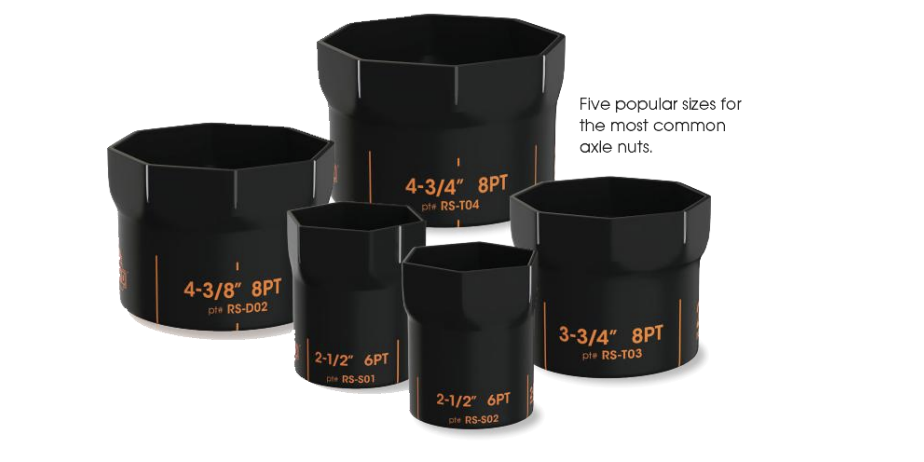
    RevHD, a leading provider of premium wheel end components, has expanded its product line with the release of a new precision-engineered line of sockets that allows visual use of the technician-trusted 2-1-1 bearing adjustment procedure for all manually adjusted hubs.

    RevHD’s new sockets feature etched hash marks that guide technicians through the 2-1-1 process: an easy-to-remember, repeatable method that helps eliminate human error and delivers consistent RP-618 accuracy on the wheel end.

    Built with input from the shop floor, these sockets can be used with a wide range of nuts on the market (including the Rev-Loc Universal Spindle Nut) to deliver a TMC RP-618 perfect bearing adjustment on any manually adjusted hub, according to the company.

    “This socket is a technician-first solution that helps make every bearing adjustment more accurate,” said Sean McDonald, president, RevHD. “Ours is a grassroots approach, built on listening to technicians and fleet owners and ultimately designing products that make their jobs easier. Our new socket is no different, allowing technicians to more easily and quickly conduct a proper bearing adjustment on a manually adjusted hub. It’s at the core of what we do – maintenance made simple.”

    The 2-1-1 method comes to life on RevHD’s sockets by using etched hash marks, allowing you to see the markings that otherwise would be covered by a traditional socket, the company said.

    Designed to pair with the Rev-Loc Spindle Nut and compatible with industry- standard options like the Pro Torq nut, the socket enhances both accuracy and efficiency in wheel-end service.

    Key features include:

    • Etched hash marks for easy 2-1-1 visual alignment
    • Available in five popular sizes for common axle nuts, including the TP axle
    • Precision-matched sizing for repeatable, accurate torque settings
  • Kenworth teams with Wyoming School to Launch NextTech program

    Kenworth teams with Wyoming School to Launch NextTech program

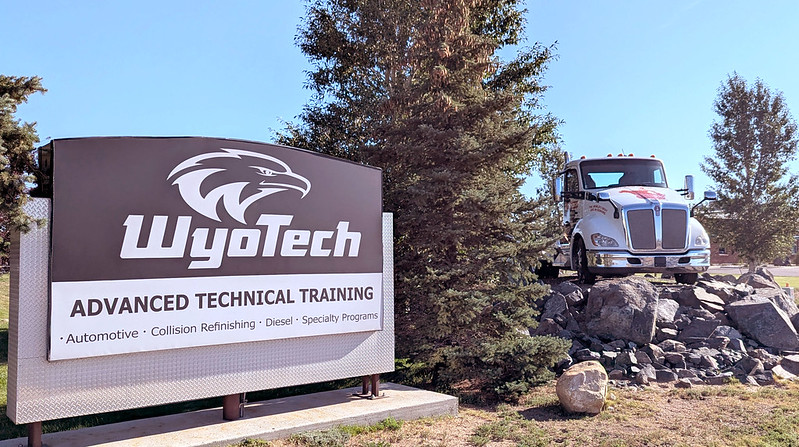
    Kenworth recently announced a new partnership with WyoTech, a premier diesel technician training school, to launch the Kenworth NextTech program, a hands-on training initiative designed to address the shortage of skilled diesel technicians.

    The program was unveiled during Kenworth Day at WyoTech in Laramie, Wyoming, which featured a ribbon-cutting ceremony, guided campus tours, the unveiling of Kenworth branded wall art, and a meet-and-greet with students and dealer representatives.

    Through this partnership, Kenworth and WyoTech aim to build a stronger, more prepared workforce of Kenworth-certified technicians, according to a statement from the two.

    “The Kenworth NextTech program will build a strong pipeline of trained technicians with hands-on experience working with Kenworth’s advanced trucks and powertrains,” said Kevin Haygood, Kenworth’s assistant general manager for sales and marketing. “Through our collaboration with WyoTech, the Kenworth NextTech program will be key to creating a sustainable workforce for our dealers and ensure exceptional service for our customers.”

    RELATED NEWS: Kenworth Essentials: A successful pipeline of entry-level technicians from education to dealership

    The Kenworth NextTech program, which is available to any enrolled WyoTech student, provides access to the same training and proprietary service tools used by Kenworth dealership technicians across North America. The new program will provide students with:

    • Free access to Kenworth Essentials dealer technician training modules (the same modules every new technician is required to complete when hired at a Kenworth dealership).
    • Enrollment in instructor-led certification courses covering Kenworth Service Systems, Kenworth Electrical Systems, and Kenworth Diagnostics
    • Kenworth trucks, equipped with PACCAR MX engines and powertrains
    • PACCAR MX engines and MX engine tool kits
    • Kenworth’s DAVIE4 diagnostic service tools and software licensing
    • A WyoTech-dedicated Kenworth program manager

    “This partnership represents everything WyoTech stands for: industry-driven training, real-world readiness, and building strong pathways into the trades,” said Kyle Morris, WyoTech’s campus president. “Securing this partnership with Kenworth is a pivotal step in giving our students direct access to the technologies and training that today’s industry demands. It’s about more than just equipment; it’s about building a future where our graduates are the top choice for employers from day one.”

    Students participating in the Kenworth NextTech program will train using real-world tools in a simulated shop environment and graduate with Kenworth certifications – better preparing them to contribute from day one at a Kenworth dealership.

  • This summer’s group of interns arrive at PACCAR Technical Center

    This summer’s group of interns arrive at PACCAR Technical Center

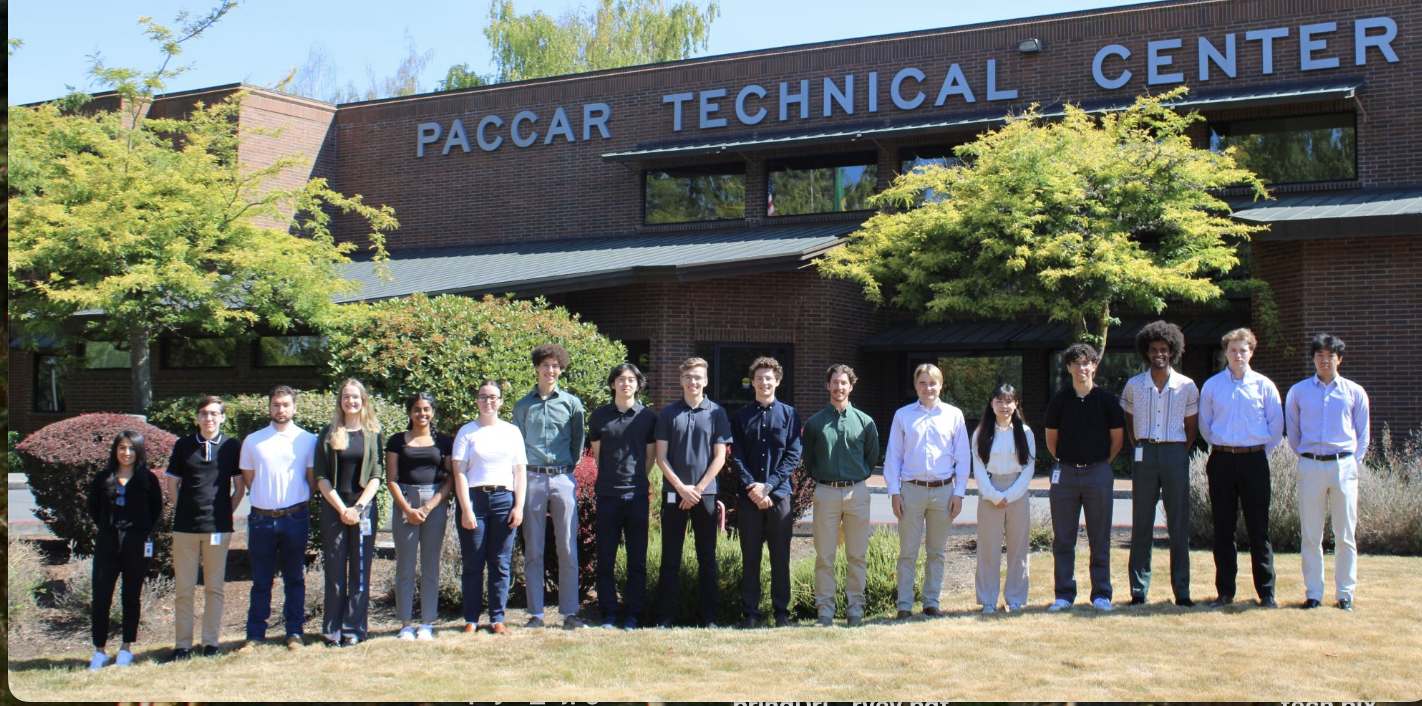
    The 2025 Summer Interns recently arrived at the PACCAR Technical Center. Over the next few months, the interns will be contributing to projects across the Technical Center while gaining valuable hands-on experience.

    “We cannot wait to see all they will accomplish this summer,” said PACCAR on social media.

    Situated in Mount Vernon, Washington the 375 acre site provides test and development for PACCAR divisions, including Kenworth, Peterbilt, and DAF trucks.

    PACCAR’s webiste says:

    “PACCAR’s Technical Centers in Europe and North America are equipped with state-of-the-art product development and validation capabilities and staffed with experts in powertrain and vehicle development. The advanced engineering tools in the technical centers are utilized to innovate and accelerate the launch of new products.

    “New 3-D prototype machines were introduced in 2013 to accelerate the design process from concept to production. Digitally controlled, proprietary hydraulic road simulators enhance product validation by replicating millions of road miles in weeks, instead of years. Sophisticated computer simulations and advanced analysis of engine and vehicle control systems operate on powerful supercomputers to optimize vehicle efficiency.

    “PACCAR’s Technical Centers partner with government agencies and academic institutions to evaluate future vehicle technologies. The technical centers leverage these partnerships to identify innovative designs that will further improve the industry-leading performance and fuel efficiency of Kenworth, Peterbilt and DAF trucks.”

  • RDO Truck Center technician wins Nebraska SuperTech title again

    RDO Truck Center technician wins Nebraska SuperTech title again

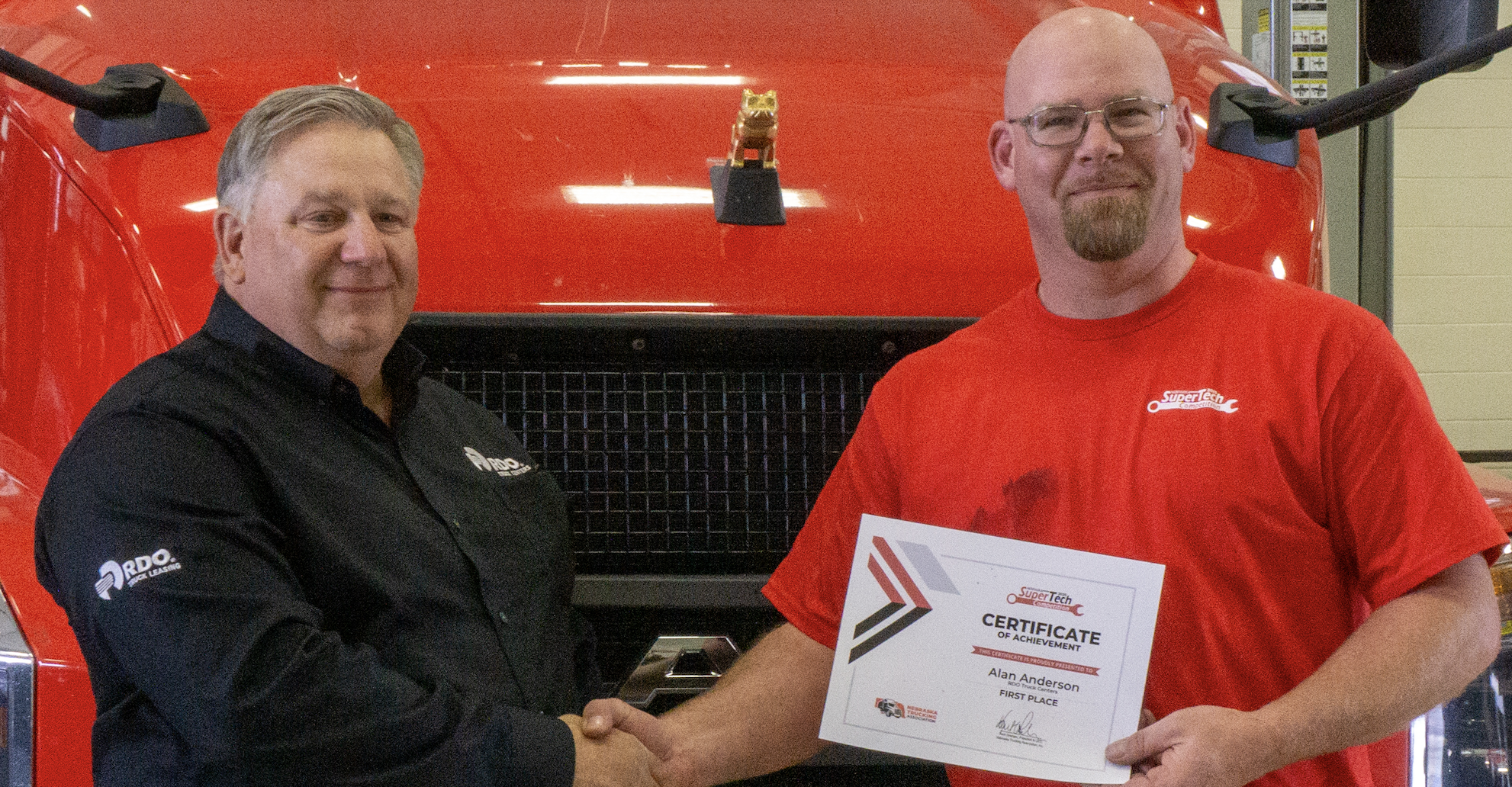
    RDO Truck Center’s Alan Anderson won the 2025 Nebraska SuperTech competition. It was Anderson’s second year in a row to take home to top title.

    Anderson will go on to represent Nebraska at the National SuperTech competition, hosted by the American Trucking Associations’ Technology & Maintenance Council, Sept. 14–18 in Raleigh, North Carolina.

    Douglas Beck of Truck Center Companies placed second and received the First Time Attendee Award, and Isaac Bittner from Southeast Community College took third.

    In the student division, Isaac Bittner claimed top honors, followed by Schuyler Eatherton of Central Community College in second, and Jon Grovijohn of Metropolitan Community College in third.

    Hosted by the Nebraska Trucking Association’s Technology & Maintenance Council, the event took place on July 17 at Central Community College in Hastings. It was the 17th year of the statewide competition.

    This year’s contest brought together 16 professional technicians and three student competitors for a full day of hands-on challenges and technical problem-solving. The annual competition showcases the vital work of diesel service professionals through a mix of diagnostics, inspections, and technical problem-solving. Competitors completed 10 hands-on stations and a qualifying ASE-style written test in June to earn their spot in the live event.

    Each station was designed to mirror real-world challenges faced in the shop. From electrical issues to power steering diagnostics, competitors were pushed to apply both theory and hands-on experience.

    Each station winner also received a $100 cash prize, adding an extra layer of recognition for technical excellence.

    The 10 station winners were:

    • Electrical – Colin Magdanz, Truck Center Companies
    • Precision Measurement – Alan Anderson, RDO Truck Centers
    • Vehicle Inspection (supported by Sgt. Huhman and Trooper Adams of the Nebraska State Patrol) – Colin Magdanz, Truck Center Companies
    • Drive Train – Colin Magdanz, Truck Center Companies
    • Shop Safety – Schuyler Eatherton, Central Community College
    • Advanced Electrical – Alan Anderson, RDO Truck Centers
    • Opt Idle – Steven Weber, Crete Carrier Corporation
    • Power Steering – Alan Anderson, RDO Truck Centers
    • Transmission – Isaac Bittner, Southeast Community College
    • Wheel End – Isaac Bittner, Southeast Community College

    Central Community College in Hastings has hosted the Nebraska SuperTech competition many times. The event is organized each year by Jerry Wessel of the Nebraska Trucking Association (NTA), in collaboration with the NTA’s Technology & Maintenance Council (TMC). The trucking association gave special thanks go to Bill McKay, TMC chair, for his key role in developing hands-on stations that reflect real-world challenges technicians face on the job.

  • Texas State Technical College adds Diesel power technologies center

    Texas State Technical College adds Diesel power technologies center

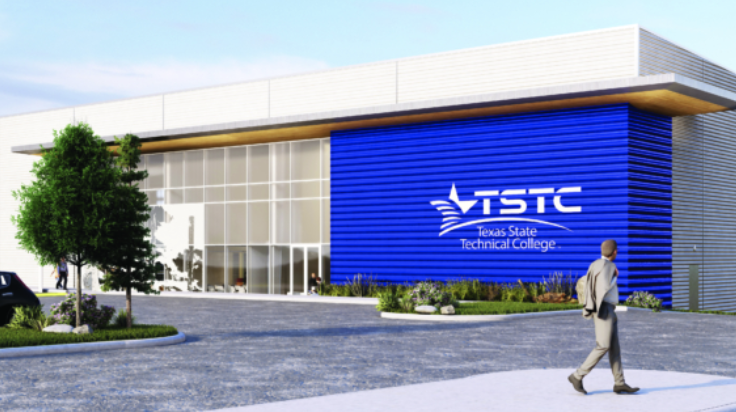
    The Texas State Technical College’s new Diesel Power Technologies building at the Marshall campus will welcome students this fall.

    The $14.5 million facility includes 21,720 square feet of space and has over $2.6 million worth of training equipment. Several industry partners including HOLT CAT and Bagley Tractor & Equipment, contributed equipment to the facility.

    “When I looked at the information published by the (Texas Higher Education) Coordinating Board, our school produces between 40% and 50% of all the diesel technicians in Texas,” said TSTC Chancellor Mike Reeser. “It’s no surprise that the legislature said they were going to bet on those who have already brought the game.”

    TSTC offers:

    • Diesel Equipment Technology – Heavy Truck Specialization (Associate of Applied Science)
    • Diesel Equipment Technology – Off Highway Specialization (Associate of Applied Science)
    • Diesel Equipment Technology – Off Highway Specialization (Associate of Applied Science)
    • Diesel Equipment Technology – Heavy Truck (Certificate of Completion)
    • Diesel Equipment Technology – Off Highway Specialization (Certificate of Completion)
    • Diesel Equipment Technology – Heavy Truck (Certificate of Completion)
    • Diesel Equipment Technology – Off Highway Equipment Specialization (Certificate of Completion)
    • John Deere Technology (Associate of Applied Science)
    • John Deere Technology (Certificate of Completion)

    It also has programs for automotive and aviation technicians.

    Registration for TSTC’s fall semester is underway. For more information, go to tstc.edu.