Follow Us

Author: admin

  • Ford recalls 4.3 million vehicles; among several carmakers with software problems

    Ford recalls 4.3 million vehicles; among several carmakers with software problems

    Several automakers have announced major recalls prompted by software issues, according to the National Highway Traffic Safety Administration.

    Ford

    Ford is recalling over 4.3 million vehicles, including 2021–2026 F-150, 2022–2026 F-250 Super Duty, Expedition, Maverick, and 2024–2026 Ranger models, because of a software “race condition” in the Integrated Trailer Module (ITRM). This error can cause a loss of communication between the vehicle and trailer, resulting in the failure of trailer brake lights and turn signals. This potentially increases the possigility of a total loss of trailer braking capability. Ford will issue an over-the-air (OTA) software update to the module, or dealers can perform the update manually, under NHTSA Campaign ID 26V-104.

    Toyota

    Toyota is recalling numerous 2025–2026 Lexus LX 600 SUVs because of a software error in the transmission control unit that can cause a solenoid to fail. This failure can result in unexpected shifting behavior, a sudden loss of power, or internal mechanical damage to the 10-speed automatic transmission. Dealers will update the transmission control unit software and replace the valve body or transmission assembly if internal damage is already present under NHTSA Campaign ID 26V-089.

    Cadillac

    General Motors is recalling some 2024 Cadillac Lyriq vehicles because a software bug in the vehicle cockpit unit that may cause the rearview camera screen to turn gray or go blank. When the vehicle is shifted into reverse, the lack of a camera image reduces driver visibility and fails to comply with federal safety standards for rear-view visibility. The remedy involves an over-the-air software update to the VCU, though dealers can also perform the flash manually under NHTSA Campaign ID 26V-082.


  • Cost of car ownership underestimated; rising costs shift consumer behavior

    Cost of car ownership underestimated; rising costs shift consumer behavior

    Synchrony’s new Cost of Car Ownership survey recently revealed drivers are paying nearly 167% more per year than expected to keep their current vehicles on the road. This $4,565 discrepancy between estimated and actual costs could place an additional burden on household budgets and weigh on consumer spending in other categories, according to to the survey.

    According to Kelley Blue Book, the average sale price of a new car hit a record $50,080 in 2025. With rising tariffs and broader economic uncertainty adding further pressure, many consumers are rethinking their buying decisions. In a 2024 study, nearly 60% of Americans said they were choosing to keep their vehicles longer to avoid the financial burden of a new purchase.

    Synchrony’s Cost of Car Ownership survey found that even those forgoing a new car purchase are still spending more on maintenance and other auto-related expenses than they expect. Excluding loan and lease payments, car owners estimate spending $2,738 annually on their vehicle. However, the survey shows the actual yearly total is $7,303. These figures are even higher for younger drivers, with Millennials and Gen Z spending $10,101 and $9,984 per year, respectively.

    “The disparity between perceived and actual spending can create real financial strain for drivers who may not be budgeting for the true cost of car ownership,” said Curtis Howse, EVP & CEO, Home and Auto, Synchrony. “That’s why becoming informed about the full scope of car ownership costs and planning ahead for how to pay for them is essential. Access to flexible financing can help ease that affordability burden, allowing drivers to handle routine maintenance and address unexpected repairs without making difficult financial trade-offs.”

    Other key insights from Synchrony’s Cost of Car Ownership survey include:

    • Gas and Insurance are the Biggest Contributors to Annual Car Spend: When examining what factors are driving these rising costs, the most significant expenses were gas and insurance, which cost drivers an average of $1,956 and $1,730, respectively, each year. Other top expenses include maintenance ($622) and service/repairs ($659), tires ($377), and auto parts and accessories ($240).
    • Multicar Households on the Decline: Increasing vehicle prices and maintenance costs may also be contributing to the decline in multicar homes. According to the research, 65% of respondents report they are responsible for managing only one vehicle in their household, while just 25% manage two cars. These numbers fall below the 2023 U.S. Census, which showed 37% of households had two vehicles and 22% of households owned three cars or more.
    • Gen Z and Millennials are the Leading Spenders: Gen Z and Millennials spend the most across all major categories, including car maintenance, where they spend $976 and $768 each year, respectively, compared to the $622 average. The same holds for service and repairs, including transmission replacement and engine work, where Gen Z and Millennials are spending $983 and $931 each, well above the $659 average. Despite these high costs, Gen Z and Millennials continue to get behind the wheel, outspending all others on gas, tolls, parking, and car washes each month.

    Synchrony’s Cost of Car Ownership survey was a quantitative online survey of 1,030 consumers aged 18+ from around the United States, fielded in partnership with the Ask Suzy platform, which gathers real-time feedback from the general population. All survey respondents were self-reported to be financially responsible for the general costs and upkeep of at least one passenger vehicle that they owned or leased.

  • ASE offers electrical diagnostics webinar

    ASE offers electrical diagnostics webinar

    The National Institute for Automotive Service Excellence ASE hosts a free one-hour webinar on Tuesday, March 10 at 4 p.m. ET entitled “Electrical
    Diagnostics Using Kirchoff’s Voltage Law.”

    When an electrical component is performing poorly, it is likely that it is not receiving enough voltage to do its job. Where did the missing voltage go? In this webinar, join Tony Martin with Delphi as he explains how Gustav Kirchhoff’s voltage law helps us diagnose these failures.

    Participants in the webinar will receive a certificate of attendance for the live session. Please allow one week for automatic email delivery of the certificate.

    After registering, a confirmation email will be sent containing information about joining the webinar. Those who are not sure if they can attend are encouraged to register as they will receive a follow-up email with details on how to attend a recorded session, if available. Access to recorded sessions is reserved for those who register for the live event.

    Click here to register.

  • ASE opens annual training survey

    ASE opens annual training survey

    The ASE Training Managers Council (ATMC) invites all auto and truck service professionals to participate in its annual training benchmarks survey.

    Those who complete the entire survey are eligible to enter for a chance to win a $250 Snap-on Tools certificate or one of several Amazon gift cards. 

    The ATMC conducts an annual survey to establish training benchmarks within the automotive service and repair industry. The survey is designed to establish a series of metrics to help the industry recognize trends, provide a comparison standard and align the offerings of training providers with the needs of training consumers. Survey data will help automobile, truck and collision repair training departments navigate forward through the changes taking place in the industry.

    Survey results must be submitted by March 20. The survey results will be compiled and presented at the ATMC Conference in Ann Arbor, Michigan, April 14-16 and then posted on the ATMC website.

    Auto and truck service professionals interested in taking part in the survey should click here.

  • Reliable Fleet Services adds 6 new locations

    Reliable Fleet Services adds 6 new locations

    CMC, the largest provider of integrated intermodal solutions in the US, announced recently that its Reliable Fleet Services (RFS), a provider of over-the-road intermodal repairs and onsite, depot-style maintenance, has expanded its operations to six new locations in response to growing customer demand in the South and Southeast.  

    The six new locations include:

    • Dallas, Texas
    • Mobile, Alabama
    • Jacksonville, Florida
    • Greer, South Carolina
    • Charlotte, North Carolina
    • Memphis, Tennessee

    This expansion builds on RFS’s established footprint in Charleston, South Carolina; Savannah, Georgia; Jesup, Georgia; and McIntyre, Georgia, strengthening the company’s ability to deliver fast, reliable maintenance and repair services wherever customers need them. 

    “Reliable Fleet Services continues to grow because it consistently delivers on what matters most, which is safety, quality, and dependable service, all while providing clear, competitive pricing,” said Vince Marino, chief executive officer of CMC. “That performance is a direct reflection of the leadership behind the business. Joe Patterson’s deep operational experience and customer-first mindset have been instrumental in building RFS into the trusted partner it is today.”

    Joe Patterson, director of Reliable Fleet Services, began his career in equipment maintenance at RFS and rose through the ranks, gaining hands-on experience across chassis repair, welding, and fleet supervision before assuming leadership of Reliable Fleet Services. His commitment to safety, customer service, and quality has shaped RFS’s operational standards and culture, while his vision for scalable, responsive service has been a driving force behind the company’s continued expansion.

    “Our focus has always been on doing the work the right way and earning our customers’ trust every day,” said Patterson. “As we expand into new markets, that commitment doesn’t change. We’re building a service network that delivers fast response, consistent quality, and safe operations wherever our customers need us.”

  • NAPA parent company plans to split into 2 companies

    NAPA parent company plans to split into 2 companies

    Genuine Parts Company recently announced it plans to separate the company into two independent, publicly traded companies, one comprising its Automotive Parts Group (“Global Automotive”) and the other comprising its Industrial Parts Group (“Global Industrial”).

    The transaction is targeted for completion in the first quarter of 2027.

    Genuine Parts Company is the paretn company of NAPA, which has 6,000 stores in the U.S.

    “Genuine Parts Company has a proud history of evolving with our markets for nearly a century,” said Will Stengel, chair-elect and chief executive officer. “Over the past decade, we established leading global footprints in attractive geographies, simplified our business mix and accelerated strategic investments to advance and differentiate our business. Creating two focused, independent companies sharpens customer and market alignment, increases clarity and speed, simplifies operations and enables disciplined, business-specific investments to unlock long-term value.”

    The business separation is the result of a comprehensive strategic and operational review of market opportunities, in-flight initiatives and business structure considerations across Global Automotive and Global Industrial, according to a statement from the company.

    Pursuing the separation is expected to create two, scaled market leaders, better able to execute their respective strategies by:

    • Creating dedicated platforms that improve operating clarity and execution speed at each company to deliver greater customer value and long-term shareholder returns
    • Establishing separate management teams with tailored expertise, strategies and decision-making authority to better address customer needs
    • Providing enhanced financial flexibility to enable strategic investments that accelerate profitable growth, improve productivity and extend market leadership positions
    • Allowing each business to design capital structures and capital allocation strategies aligned with specific business objectives, while targeting investment-grade credit metrics at each company
    • Enabling each business to attract a long-term investor base through a clear, compelling and differentiated investment profile

    There are no changes to the GPC executive team. The company names, executive teams and Boards of Directors for Global Automotive and Global Industrial will be announced at a later date.

  • bendix announces dates and locations for Advanced Technology Training classes

    bendix announces dates and locations for Advanced Technology Training classes

    Bendix Commercial Vehicle Systems LLC kicks off its 2026 brake school sessions, hosting multi-day classes across the country from March to November.

    Bendix will host in-person and virtual education opportunities for fleet technicians, owner-operators, and others to enhance the skills necessary to help keep vehicles on the road and in safe operating condition.

    To address market demand, Bendix has expanded the availability of its two-day Bendix Advanced Technology Training class. This highly attended course rounds out the Bendix training schedule, which also includes the tried-and-true three-day Bendix Air Brake Training class.

    Where to Find a Training Session

    In-person opportunities on the 2026 calendar cover 11 states. They include 16 sessions of Bendix’s three-day Air Brake Training class – long recognized as setting the industry training standard – beginning March 31-April 2 in Fresno, California.

    Seven sessions of the two-day Bendix Advanced Technology Training program are scheduled: three at company headquarters in Avon, Ohio; two in Reno, Nevada; and two in Fairfield, Connecticut. The first takes place April 14-15 in Avon.

    Bendix has scheduled two sessions of its three-day virtual training class, with one scheduled on Eastern Time and the other on Mountain Time for the convenience of attendees in western North America.

    Registration is open for the complete schedule of both courses, shown at the end of this news release. A member of the Bendix Tech Training Team conducts every class. The training team is led by a Master-level, ASE-certified technical trainer.

    What’s on the Agenda

    Bendix’s three-day Air Brake Training class is tailored to both new and experienced technicians. It covers the description, operation, troubleshooting, and service elements for the total range of components found within dual air brake systems. Classroom topics include the fundamentals of compressed air; tactics for air system failure mode diagnosis and troubleshooting; and air brake system and foundation brake components, including air compressors, valves, foundation drum brakes, and air disc brakes. The class also provides an introduction to the Bendix GSBC (Global Scalable Brake Control) electronic braking system technology, as well as Bendix GSAT (Global Scalable Air Treatment).

    Bendix recommends that each participant complete the online air brake training at the company’s brake-school.com site before taking the in-person Air Brake Training class.

    The two-day Bendix Advanced Technology Training class picks up where the Air Brake Training class ends. It covers the operation and troubleshooting of advanced safety systems and software. Topics include:

    Antilock braking systems (ABS)

    • AutoVue Lane Departure Warning (LDW) System from Bendix CVS

    • Bendix® ESP Electronic Stability Program full-stability system

    • Bendix® Wingman Advanced™

    – A Collision Mitigation Technology

    • Bendix® Fusion, the company’s flagship driver assistance system family

    • SmarTire and SmarTire Trailer-Link™Tire Pressure Monitoring Systems (TPMS) by Bendix CVS

    • Bendix® GSBC® electronic braking system and Bendix GSAT

    The Advanced Technology Training program includes in-depth, hands-on maintenance instruction for Bendix® air disc brakes and electrical diagnostics.

    All registrants in the three-day Air Brake Training and two-day Bendix Advanced Technology Training courses may elect to take part in a written test administered at the close of each class. Bendix will grade the exam, and registrants earning a passing grade will receive a Tested and Passed certificate. Those who take the exam and don’t pass will receive a Certificate of Completion, as will registrants who elect not to participate in the optional testing.

    In-person Bendix training and the optional test are not affiliated with the U.S. Department of Transportation (DOT). It does not take the place of any instruction or certification exam administered by the DOT.

    Bendix does not certify technicians for work on its systems.

    How to Register

    Because of the quantity and complexity of the products covered, Bendix recommends that each student complete the three-day Air Brake Training course or, at a minimum, the online air brake training at brake-school.com before taking the Advanced Technology Training class.

    Per-person enrollment costs are $525 for Air Brake Training, $475 for Advanced Technology Training, and $425 for the virtual class. Enrollment is on a first-come, first-served basis, and class size is limited. Register online at bendix.com or B2Bendix.com. For more information, call 1-800-AIR-BRAKE (1-800-247-2725).

    The three-day air brake training, set for Tuesday-Thursday, will be held: 

    • March 31-April 2, Fresno, Calif.
    • April 7-9, Avon, Ohio.
    • May 5-7, Indianapolis.
    • May 12-14, Huntersville, N.C.
    • May 12-14, Fort Wayne, Ind.
    • June 2-4, Reno, Nev.
    • June 9-11, Fairfield, Conn.
    • June 16-18, Avon, Ohio.
    • June 16-18, Thornton, Colo.
    • July 7-9, San Marcos, Calif.
    • July 14-16, virtual class, Eastern time.
    • July 21-23, Owosso, Mich.
    • July 28-30, Reno, Nev.
    • Sept. 15-17, Avon, Ohio.
    • Oct. 6-8, Bowling Green, Ky.
    • Oct. 6-8, Tolleson, Ariz.
    • Oct. 20-22, Oklahoma City.
    • Nov. 10-12, virtual class, Mountain time. 

    The advanced training will be held at these sites: 

    • April 14-15, Avon, Ohio.
    • June 15-16, Fairfield, Conn.
    • June 17-18, Fairfield, Conn.
    • June 23-24, Avon, Ohio.
    • June 23-24, Reno, Nev.
    • Aug. 11-12, Reno, Nev.
    • Sept. 29-30, Avon, Ohio. 
  • Brooklyn-based SJ Express celebrates 30 years of providing roadside assistance

    Brooklyn-based SJ Express celebrates 30 years of providing roadside assistance

    SJ Express, a trusted name in mobile truck repair Brooklyn and the greater New York City area, marks more than three decades of providing round-the-clock roadside assistance and fleet maintenance to commercial vehicles throughout the Tri-State region.

    Since 1991, SJ Express has been a provider for diesel mechanic NYC services, earning a reputation for fast response times, expert diagnostics, and reliable repairs that keep trucks, buses, and heavy equipment moving, according to a statement from the company. Operating 24 hours a day, 7 days a week, the company dispatches certified mobile mechanics directly to breakdown locations across Brooklyn, Manhattan, Queens, the Bronx, Staten Island, Long Island, New Jersey, and Connecticut.

    SJ Express specializes in a comprehensive range of mobile truck repair services including engine diagnostics and repair, brake system service, electrical troubleshooting, transmission repair, hydraulic systems, air conditioning service, DOT inspection preparation, and preventive maintenance programs for commercial fleets.

    The company has built long-standing relationships with fleet operators, owner-operators, trucking companies, and construction firms who depend on minimal downtime. With a fully equipped fleet of service vehicles and a team of ASE-certified technicians, SJ Express delivers shop-quality repairs at any location — whether on the highway shoulder, at a loading dock, or in a fleet yard.

    SJ Express also provides emergency roadside assistance NYC for unexpected breakdowns, tire blowouts, fuel delivery, jump starts, and lockouts. Their rapid dispatch system ensures a technician is typically on-scene within 60 minutes throughout the NYC metro area.

  • Ohio Peterbilt boasts first to be named Master Technician

    Ohio Peterbilt boasts first to be named Master Technician

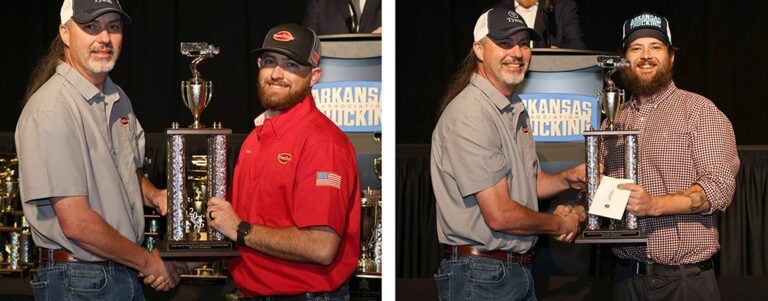
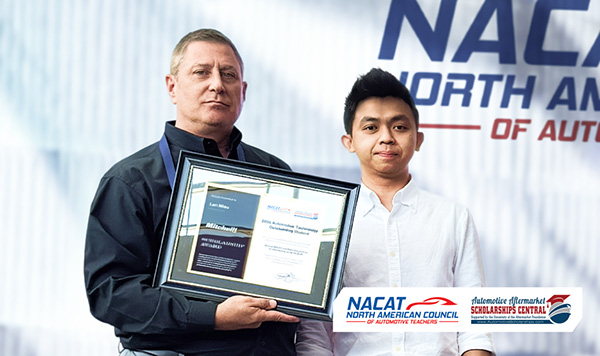
    Peterbilt recently recognized its first Master Technician, Michael Fitzpatrick of Ohio Peterbilt, marking what the company said is “a significant milestone in service excellence and reinforcing its commitment to advanced technician training.”

    The Peterbilt Master Technician designation is the highest level of technician achievement, representing a highly trained professional who has completed the most advanced level of education offered to diagnose, maintain and service Peterbilt vehicles. A Master Technician possesses in-depth knowledge across all major vehicle systems and is also recognized for their diagnostic, problem-solving abilities and leadership skills, according to the company.

    “We congratulate Michael Fitzpatrick on this significant achievement as our inaugural Peterbilt Master Technician,” said Danny Landholm, Peterbilt director of Dealer Network Development. “He has demonstrated exceptional expertise, leadership and mastery of advanced diagnostic and repair skills needed to support today’s increasingly complex vehicle technologies and the evolving needs of our customers.”

    Achieving Peterbilt Master Technician status requires extensive hands-on experience, completion of rigorous coursework and demonstrated proficiency in diagnosing and resolving critical vehicle system issues. As trusted technical leaders, to address complex truck, engine and electrical repair, Master Technicians will serve as mentors to other technicians to ensure vehicles meet Peterbilt’s high standards of performance and reliability. 

    “Earning the Master Technician designation is a proud moment in my career and the training has prepared me to deliver an even higher level of service,” said Fitzpatrick. “I’ve focused on understanding how advanced vehicle systems work together across the entire truck. This is knowledge I can apply every day and share with other technicians so we can continue improving together.”

    “Today we recognize an important accomplishment with the designation of our first Master Technician, reflecting a strong foundation of technical skill, experience and commitment to quality work. Our customers will benefit from more efficient diagnostics, dependable repairs and consistent service, while fellow technicians gain a knowledgeable resource to support ongoing learning and best practices. For our dealer network, this milestone supports continued investment in service expertise and reinforces our focus on reliable, high-quality support,” added Landholm.

  • Paccar Parts opens distribution center in Calgary, Alberta; 3rd in Canada

    Paccar Parts opens distribution center in Calgary, Alberta; 3rd in Canada

     PACCAR Parts is pleased to announce the opening of its new Parts Distribution Center (PDC) in Calgary, Alberta. As the company’s third Canadian distribution center, the Calgary PDC is strategically located to optimize delivery speed and parts availability for dealers, customers and TRP stores across Western Canada.

    Spanning 180,000 square feet, the Calgary facility can stock up to 40,000 part numbers.

    As the 21st location in PACCAR Parts’ global distribution network, the facility expands the company’s total warehouse space to more than 4.0 million square feet (372,000 square meters).

    “Our new Calgary PDC demonstrates our dedication to providing dealers and customers with the highest level of parts availability and delivery performance,” said Bryan Sitko, PACCAR vice president and general manager of PACCAR Parts. “Its strategic location strengthens our network and ensures we continue to deliver unmatched value and exceptional support across Canada.”